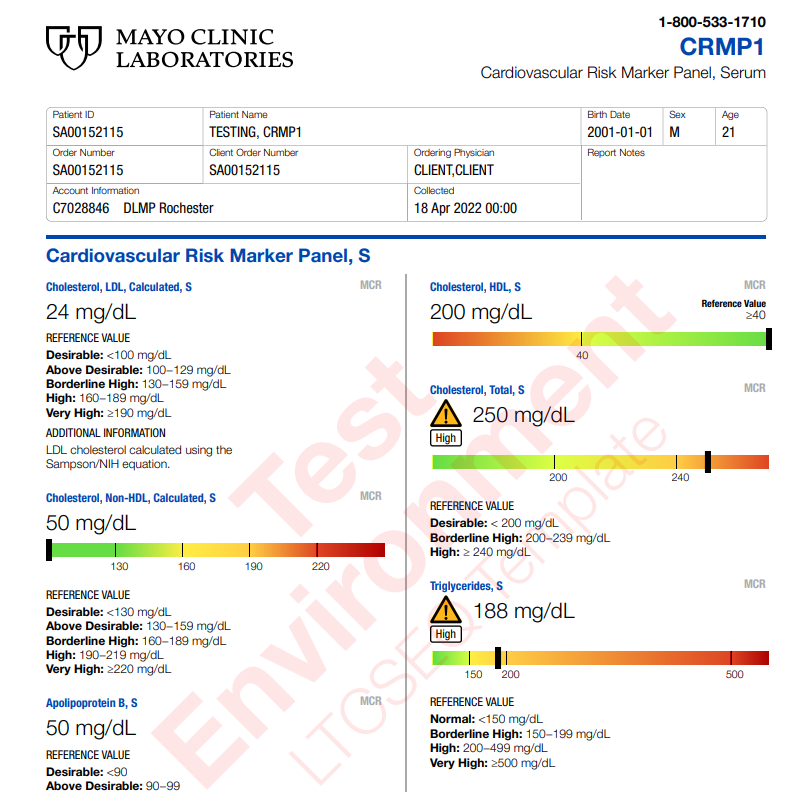
Getting blood test results back and not understanding them is one of the most frustrating experiences in healthcare. You waited days for the results, you can see rows of numbers, and perhaps a few are flagged — but your doctor's office says everything looks "fine" and you're left wondering what any of it actually means for how you feel.
Here's what you need to know.
Understanding the Basic Structure of a Lab Report
Every standard lab report follows roughly the same format. You'll see the marker name on the left, your result in the middle, and a reference range on the right. Some reports also include a units column showing how the measurement is expressed — millimoles per litre (mmol/L), micrograms per litre (mcg/L), or other units depending on the marker.
When a result falls outside the reference range, it will typically be flagged with an H (high), L (low), or an asterisk. This is your starting point — not your conclusion.
What Reference Ranges Actually Mean
This is where most people misunderstand their results. A reference range is not a definition of healthy. It is a statistical range derived from a large population of people — typically defined as the middle 95% of results in that population. This means that by definition, 5% of completely healthy people will fall outside the reference range on any given test.
It also means the range is an average, not an optimal target. You can fall within the reference range and still feel terrible if your level is at the very low end of normal. Ferritin is a perfect example — the reference range might be 15 to 200 mcg/L, but many functional medicine practitioners consider levels below 50 to be suboptimal for energy and hair health, even though 16 technically falls within range.
Common Flags and What They Mean
H — High. Your result is above the upper limit of the reference range. This doesn't automatically mean something is wrong — context matters enormously. A slightly elevated white blood cell count might simply mean you had a cold recently. A significantly elevated CRP (C-reactive protein) suggests active inflammation somewhere in the body.
L — Low. Your result is below the lower limit of the reference range. Again, context matters. Mildly low Vitamin D in a Canadian winter is extremely common. Severely low Ferritin may explain months of unexplained fatigue and hair loss.
Critical values. Some labs flag results as critical when they are dangerously outside the range. If you see this flag, contact your healthcare provider promptly.
Markers That Are Commonly Misunderstood
TSH (Thyroid Stimulating Hormone) — A high TSH means the pituitary is working hard to stimulate an underperforming thyroid. Many practitioners consider the optimal range to be 1.0–2.5 mIU/L, considerably narrower than the standard lab range of 0.4–4.0. Symptoms of low thyroid function can exist even with a TSH of 3.5, which most labs would flag as normal.
Vitamin D — The reference range floor is typically 50 nmol/L in Canada, but optimal levels for immune function, mood, and bone health are generally considered to be 100–150 nmol/L. Most Canadians are deficient without knowing it.
Ferritin — Iron storage. Chronically low ferritin is one of the most common causes of fatigue, hair shedding, brain fog, and poor exercise recovery in women. It is frequently overlooked because it falls within the broad reference range.
Glucose — A fasting glucose result tells you your blood sugar at rest. A result near the top of the normal range (5.6–6.0 mmol/L) may warrant monitoring even if not technically flagged, particularly alongside elevated insulin or waist circumference.
eGFR (Estimated Glomerular Filtration Rate) — Derived from creatinine, this estimates how well your kidneys are filtering waste. A result above 90 is considered normal. Declining eGFR over time is more informative than a single snapshot — tracking trends matters.
Ratios Matter as Much as Individual Results
One of the most important things to understand about blood tests is that markers rarely tell the full story in isolation. The ratio of HDL to total cholesterol is more predictive of cardiovascular risk than LDL alone. The ratio of estrogen to progesterone is more clinically relevant than either hormone individually. The combination of high fasting insulin with normal fasting glucose is an early warning sign for insulin resistance that neither marker alone would reveal.
This is why comprehensive panels exist — and why interpreting a single marker without context can be misleading.
What to Do When Something Is Flagged
First, don't panic. A single flagged result rarely tells the whole story and often has a benign explanation. Second, don't ignore it. Flagged results are data points worth understanding, even if they don't require immediate action.
If your results came back with flags you don't understand, or if you're in a "normal" range but still experiencing symptoms, the next step is to look at the full picture rather than individual numbers.
The Results Interpreter — for AvoVita Clients
AvoVita clients have access to our results interpreter inside their account, in the results section. It reads the reports from tests you ordered through AvoVita and returns a structured plain-language summary covering each marker, what the reference ranges mean, patterns worth noting, and what is worth raising with your provider. One credit is used per result file posted.
The interpreter is there to help you understand results you ordered from us — not to replace a conversation with your healthcare provider, but to make that conversation more informed. It is available to AvoVita clients and covers AvoVita results only.
Access comes with your first order. Book a test and your account, results and interpreter credits are set up when you check out.